
Break free from OCD.
Reclaim your life.
Evidence-based treatment for OCD.
Specializing in Exposure and Response Prevention (ERP).
Serving Washington, DC, Maryland, and PSYPACT states.
Hi there! I’m Dr. Diane Lameira.
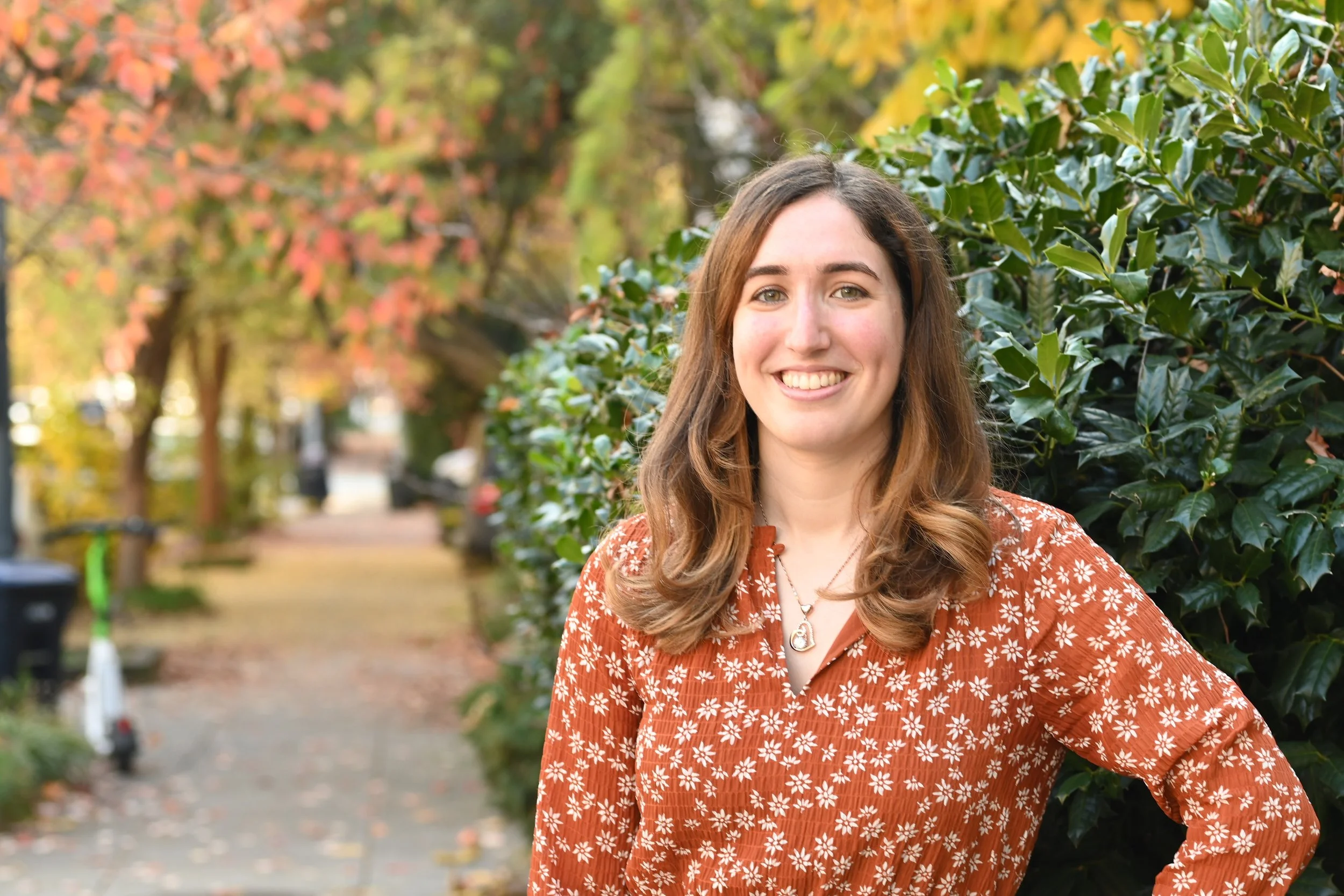
I'm a licensed psychologist based in Washington, D.C., specializing in obsessive-compulsive disorder (OCD) treatment using Exposure and Response Prevention (ERP), the gold-standard therapy for OCD. I earned my Ph.D. in Clinical Psychology from George Mason University.
Before starting my private practice, I trained and later worked as a clinical psychologist at the Capital Institute for Cognitive Behavioral Therapy (CICBT), founded by Dr. Stephen Holland, a Founding Fellow of the Academy of Cognitive and Behavioral Therapies and co-author of Treatment Plans and Interventions for Depression and Anxiety Disorders.
My approach is collaborative, compassionate, and grounded in evidence-based care. My goal is to help you build a full and meaningful life, guided by your values.
I offer affirming care for clients of all identities, including LGBTQIA+ individuals, and deeply respect the values and experiences that shape each person’s story.

The OCD Loop
“What if I got someone sick?”
“What if I'm a bad person?”
“What if I'm not in love enough with my partner?”
To feel safer, you seek reassurance, distract yourself from the thought, or avoid what reminds you of it.
And for a moment, it works — until it doesn’t.
Over time...
The compulsions get harder to resist.
The thoughts get louder.
And life starts to shrink.
If this feels familiar, you're not alone and there is a treatment that can help:
Exposure and Response Prevention (ERP)

How ERP Works
Instead of pushing anxiety away, we teach your brain that it doesn’t have to obey OCD’s rules.
You’ll gradually face what triggers anxiety and build new skills along the way—resisting checking, avoiding, or seeking reassurance.
As you practice these new responses, your brain starts to learn what OCD tried to hide:
You can tolerate sitting with uncertainty.
Over time, the fear quiets down—
not because the thoughts disappear,
but because you’ve learned to respond to them differently.
That’s how freedom begins:
not by controlling your thoughts,
but by changing your relationship with them.
Frequently
Asked
Questions
-
I offer a free 15-minute phone consultation to see if we’re a good fit. Sessions are $250 for a 50-minute individual therapy appointment.
-
I am an out-of-network provider, which means I do not participate directly with any insurance companies. However, if your insurance plan includes out-of-network benefits, you may be eligible for reimbursement. I can provide you with a monthly "superbill" (a detailed invoice) that you can submit to your insurance for potential reimbursement.
-
If you are considering using your out-of-network benefits, I recommend reaching out to your insurance provider to understand your coverage. You may find it helpful to ask the following questions:
Do I have out-of-network behavioral health benefits? (Many non-HMO plans offer this coverage.)
How many therapy sessions per calendar year are covered? (Some plans have limits.)
What percentage of the session fee will be reimbursed? (It’s important to clarify whether this is based on my fee or an insurance-determined rate.)
How much is my deductible, and how much has been met? (This is the amount you must pay out-of-pocket before reimbursement begins.)s here
-
I offer both in-person and virtual therapy options. In-person appointments are available two days a week at 1350 Connecticut Ave, NW, Suite 605. I also provide secure, HIPAA-compliant telehealth sessions for clients who prefer online therapy.
